

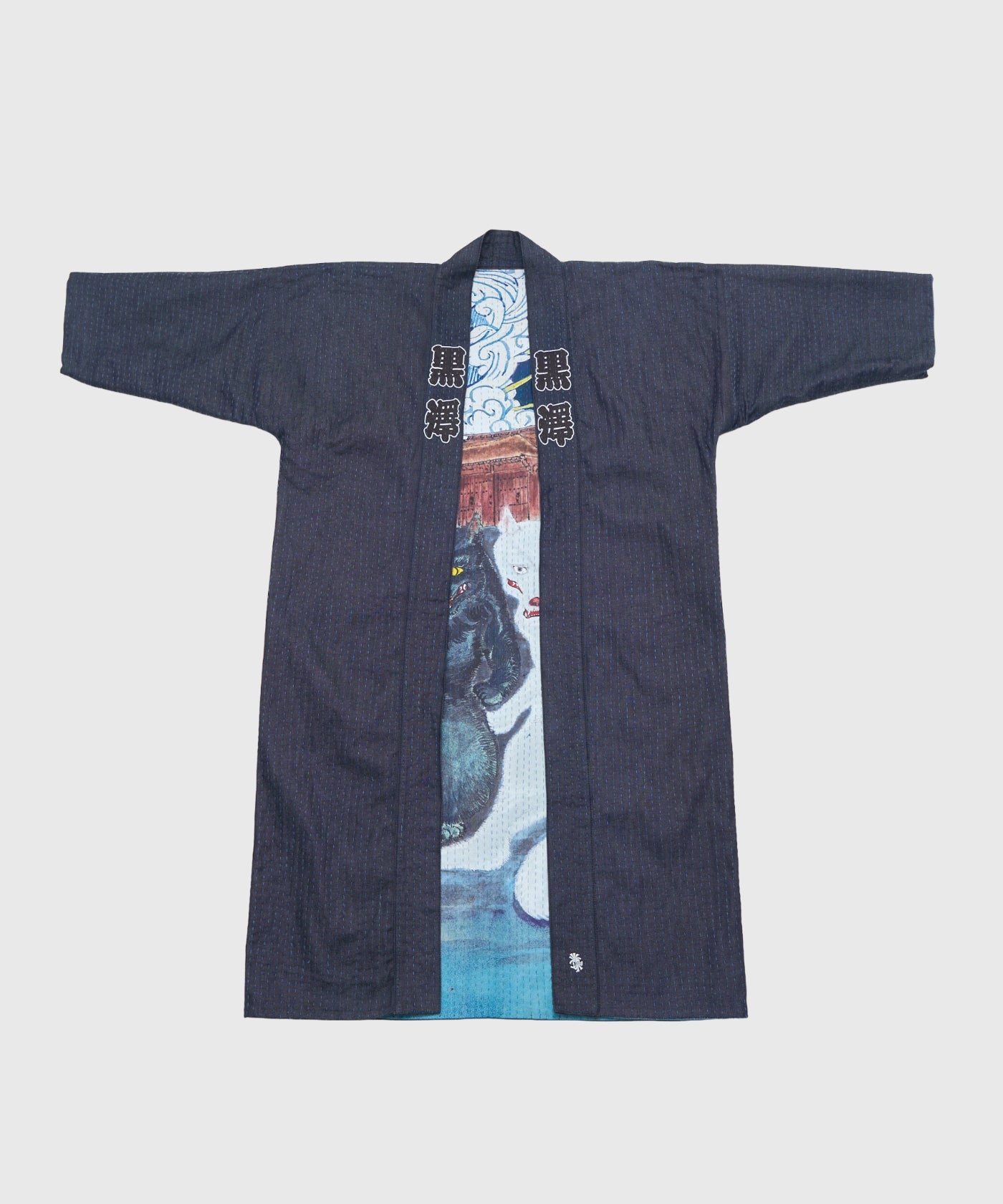
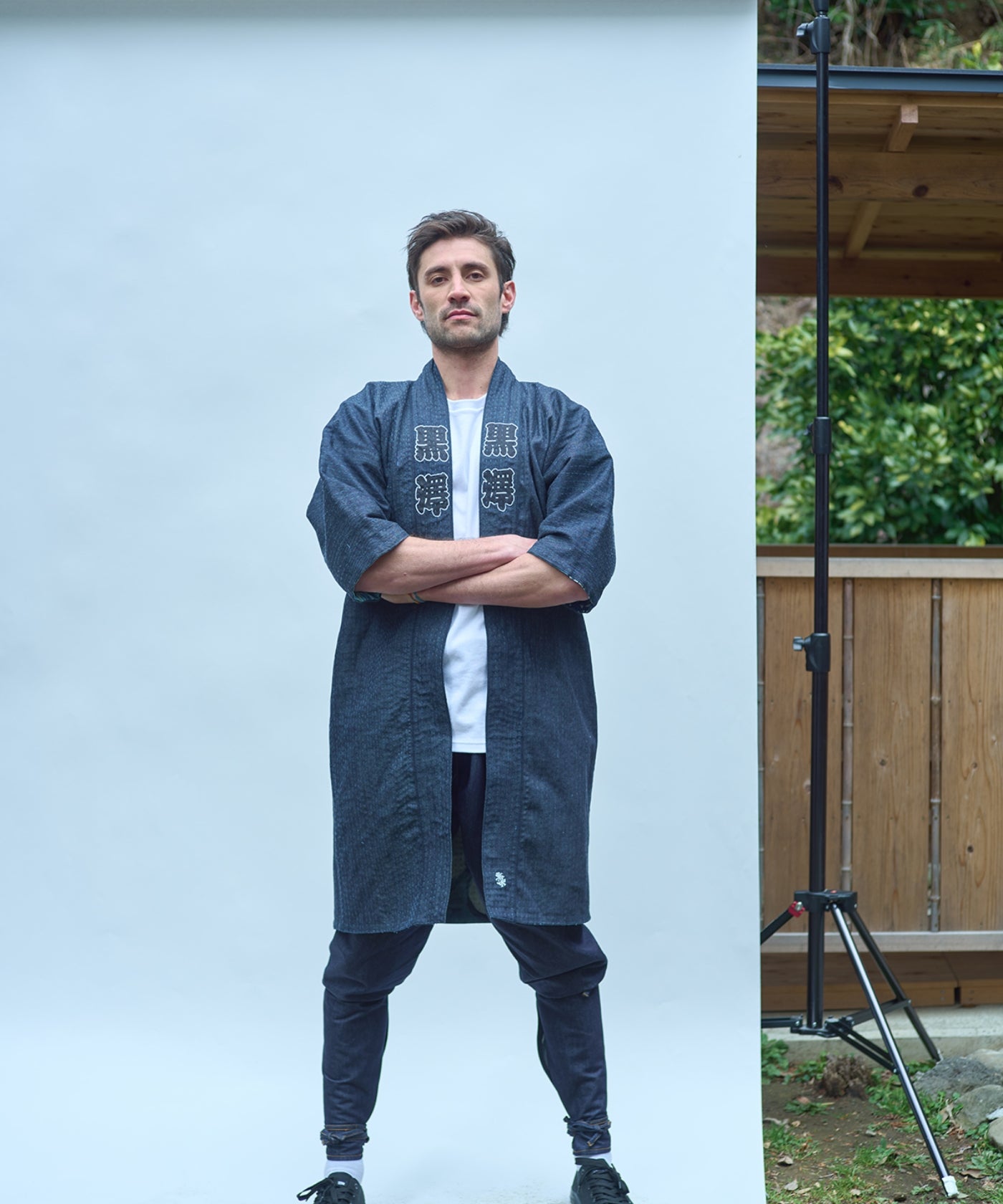
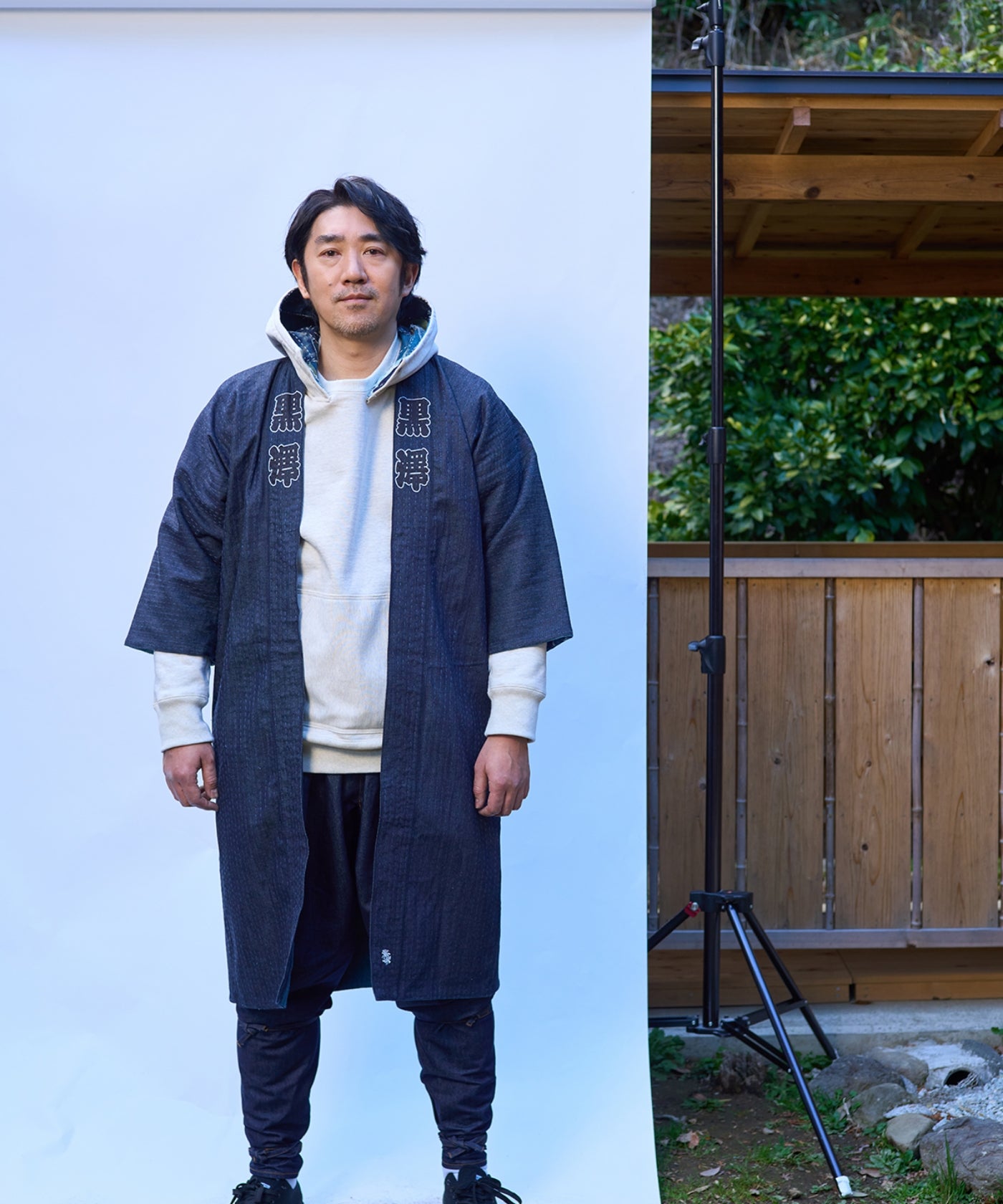
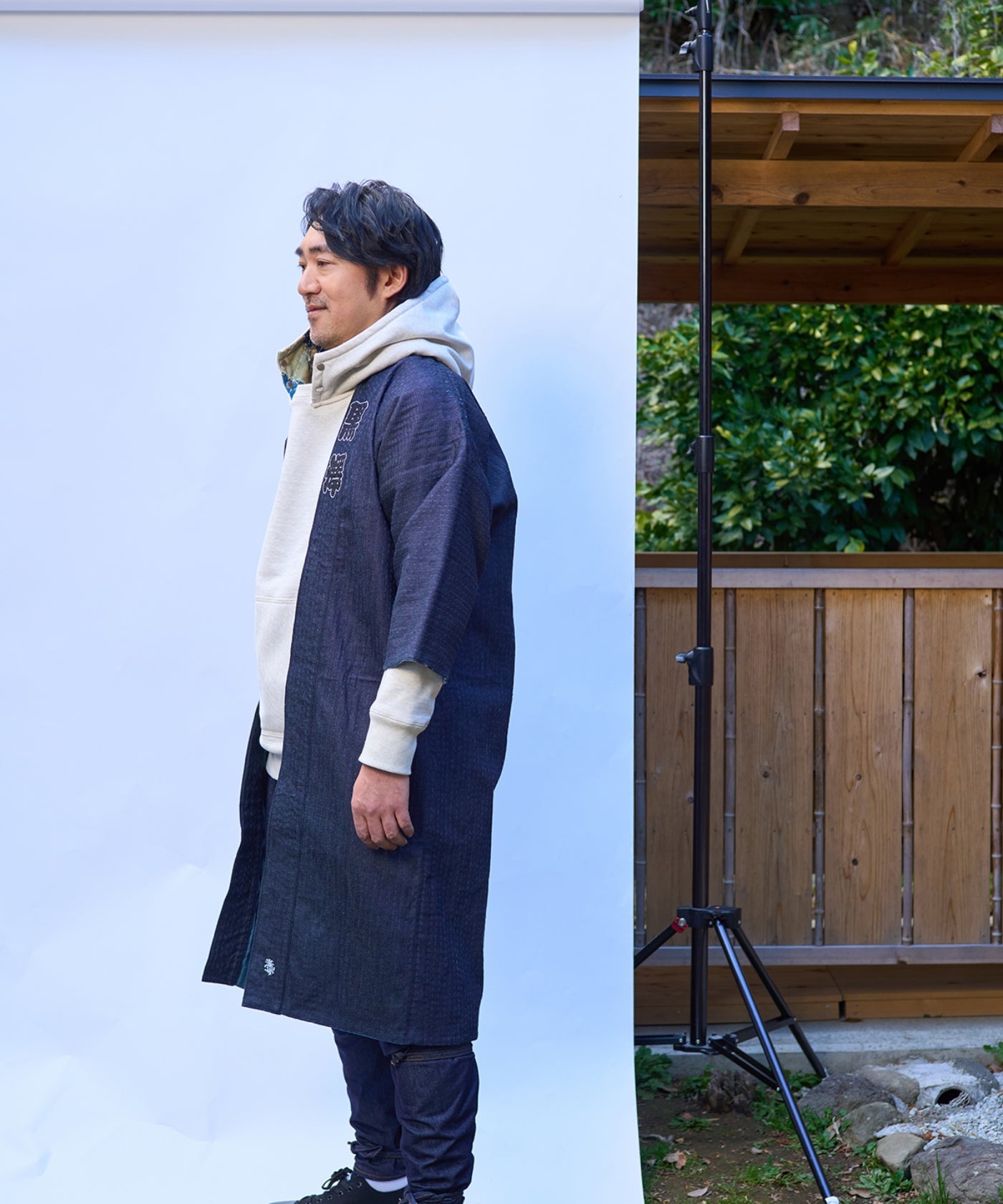
Firefighter’s HIKESIBANTEN with hand sashiko stitching
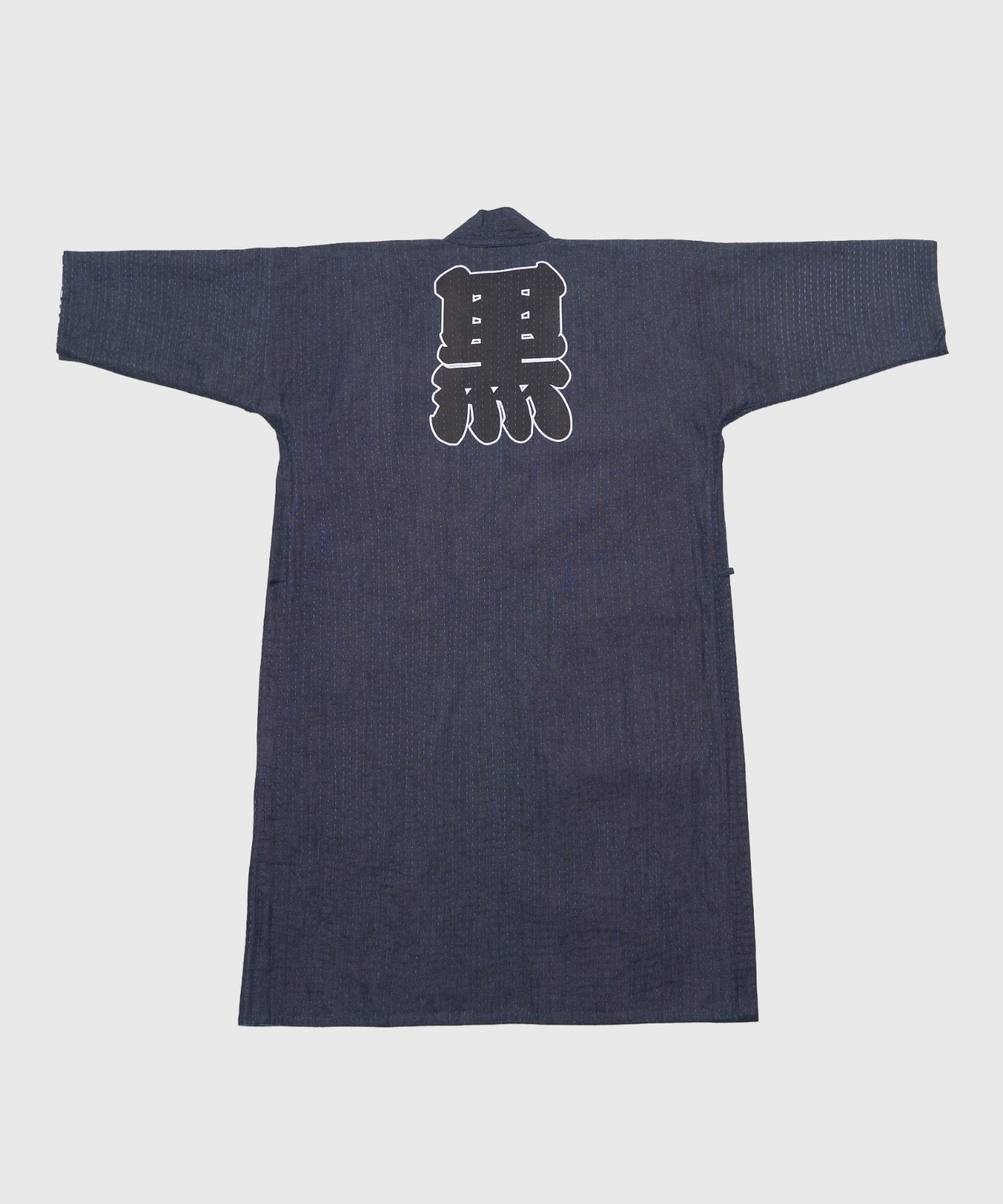
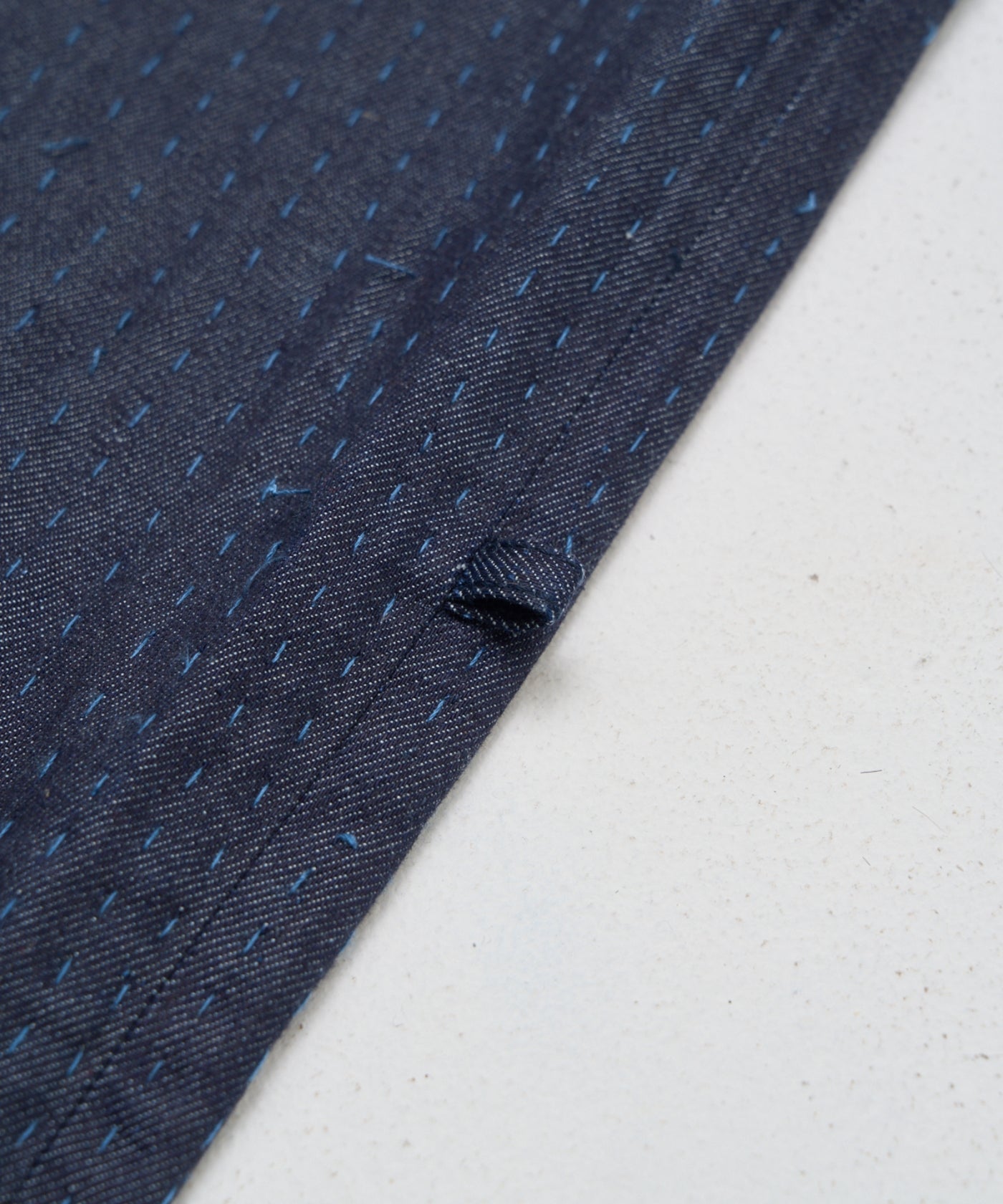
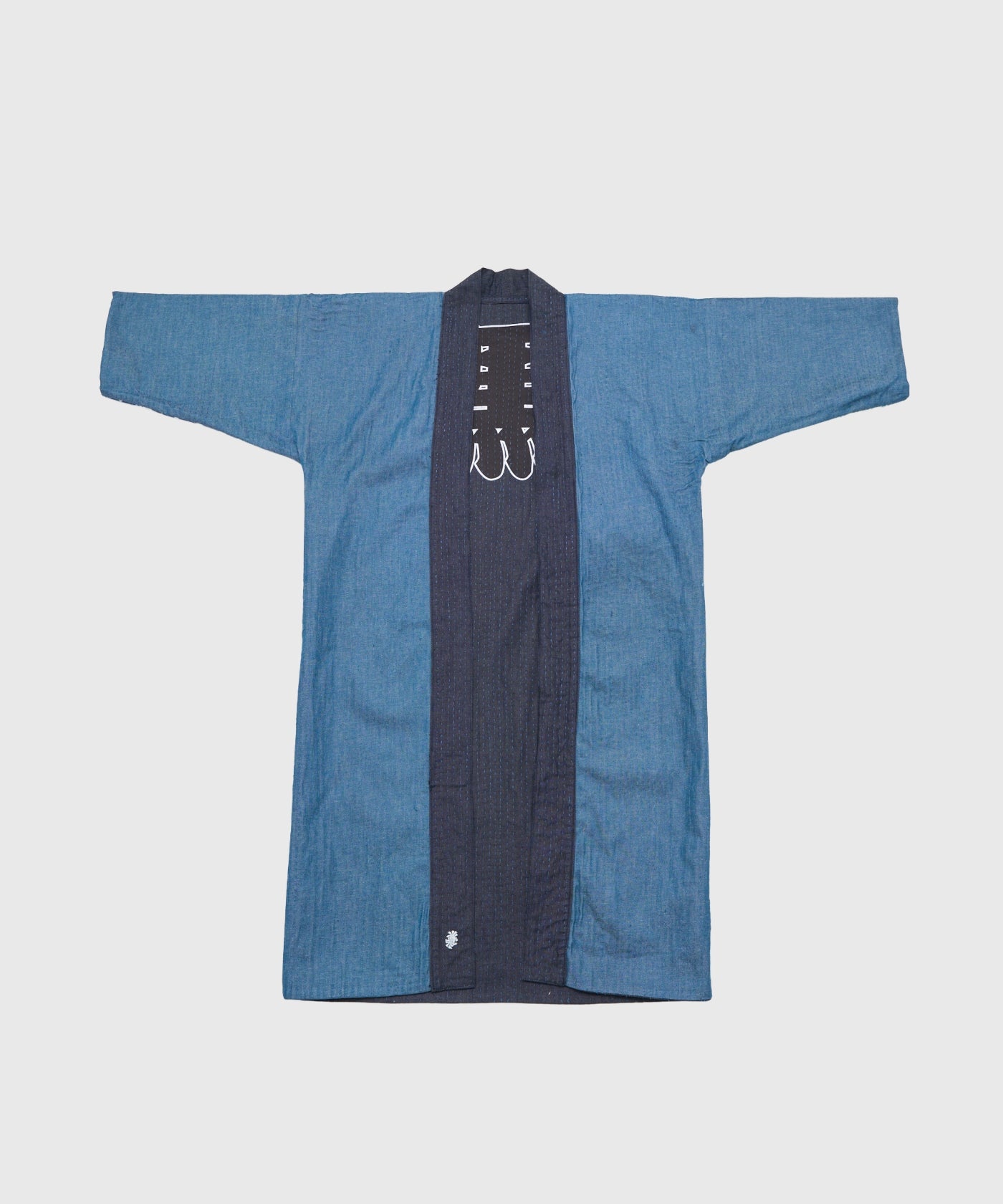
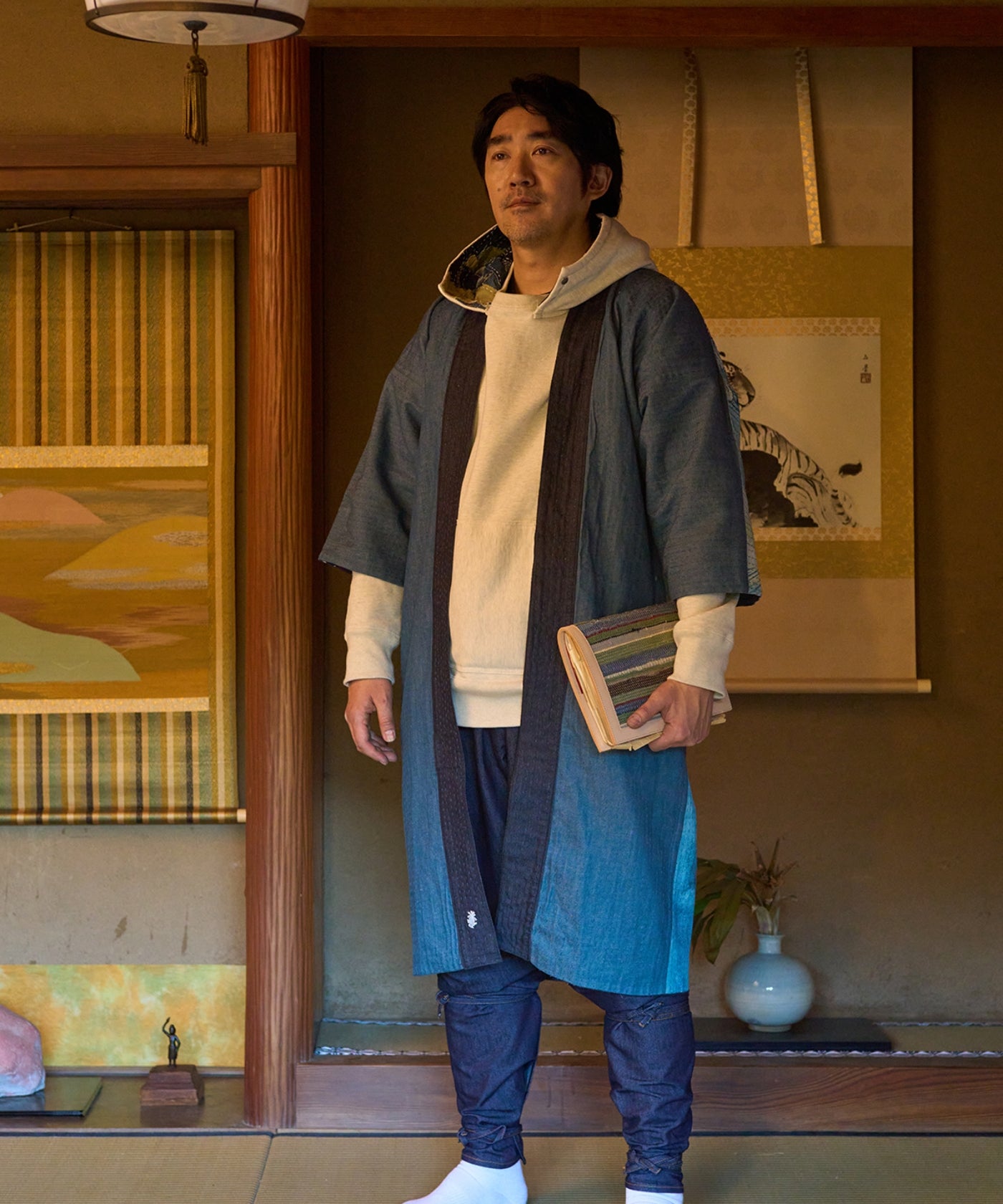
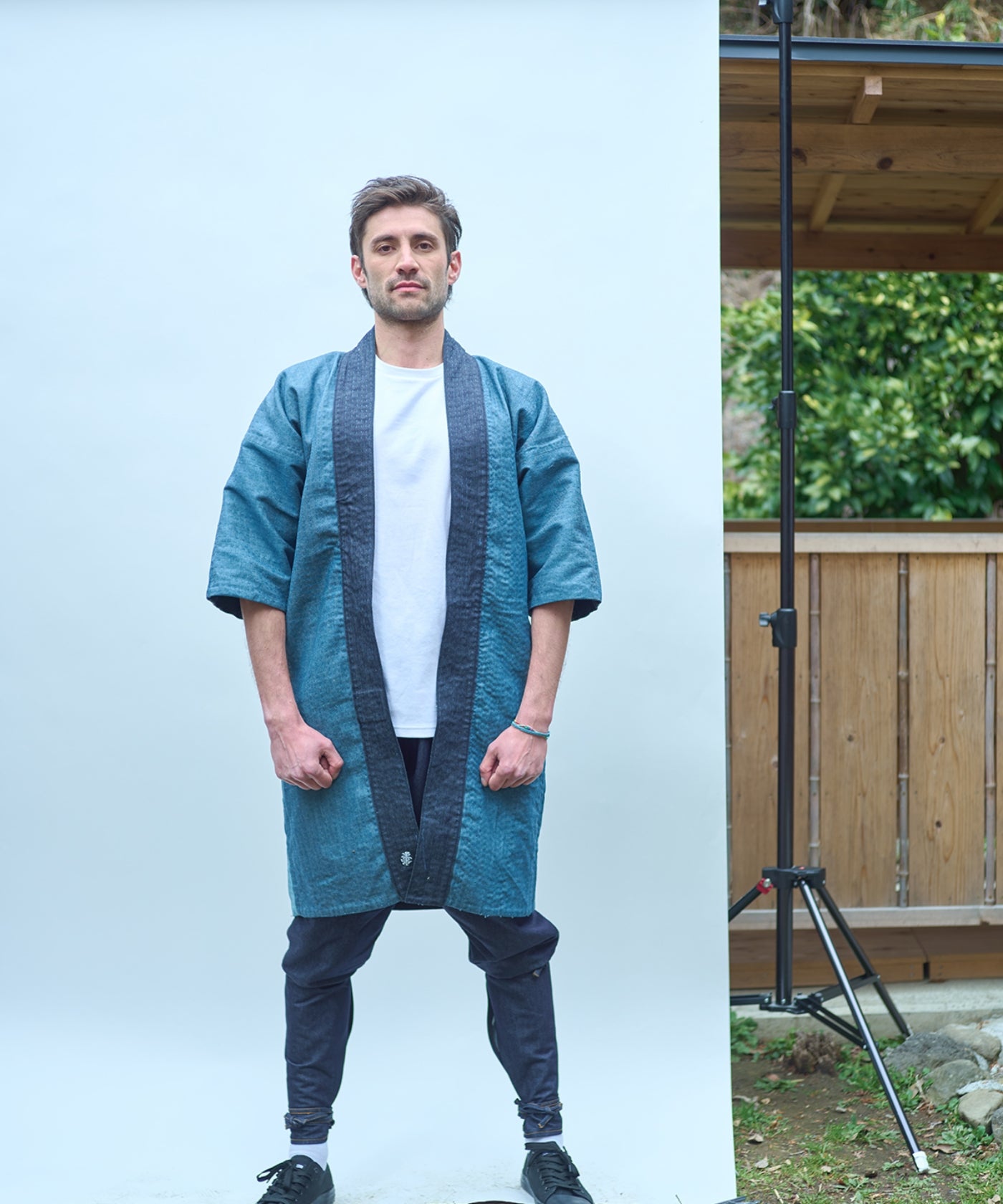
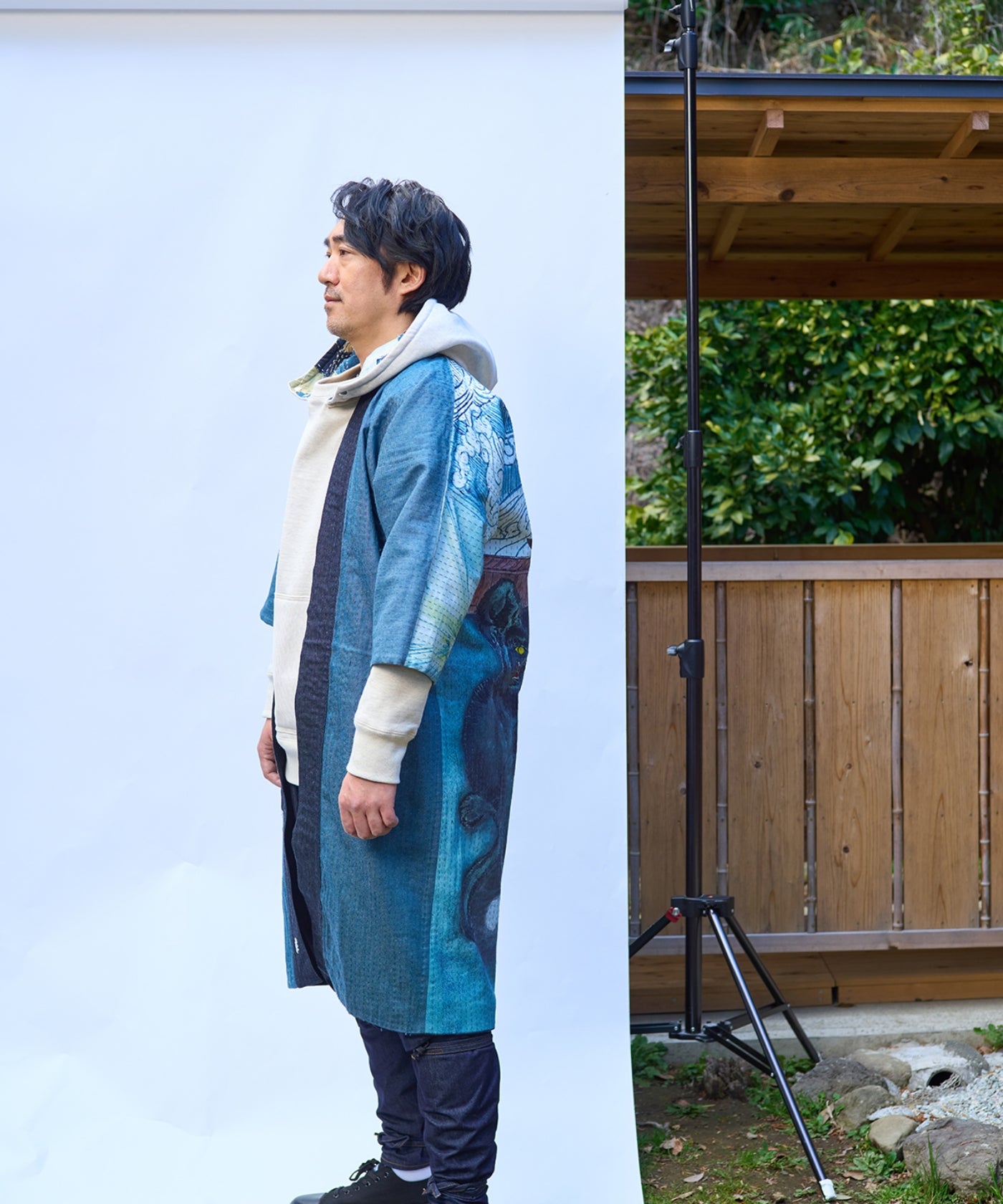
In pursuit of a clean silhouette, no pockets were added. Instead, a loop for a netsuke charm was attached, allowing each wearer to add their own.
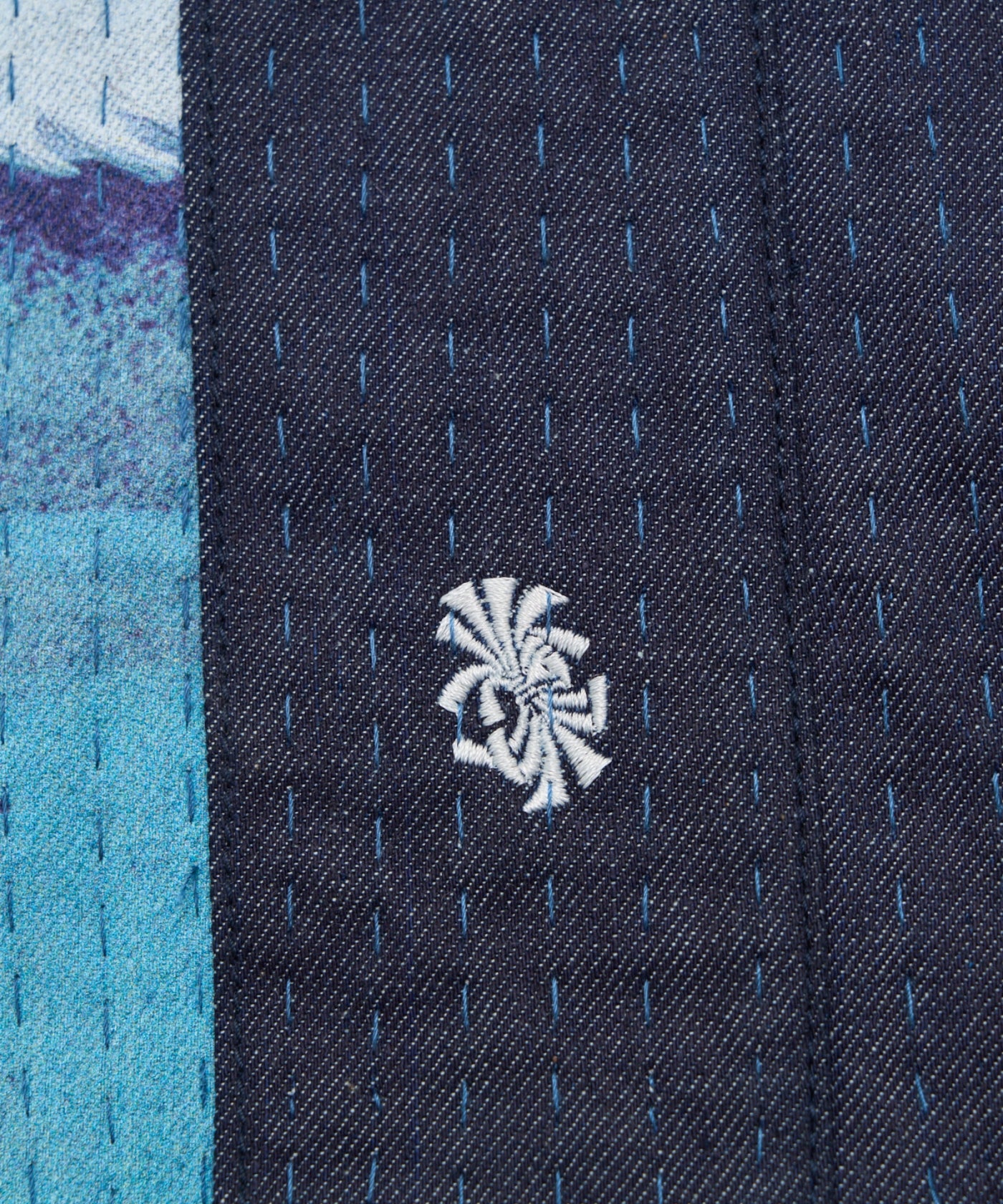
This is the high-end model of the hikeshi long hanten — and the flagship model of Kurosawa Costume — hand-stitched stitch by stitch over more than a month and a half by the grandmothers of Otsuchi Town.
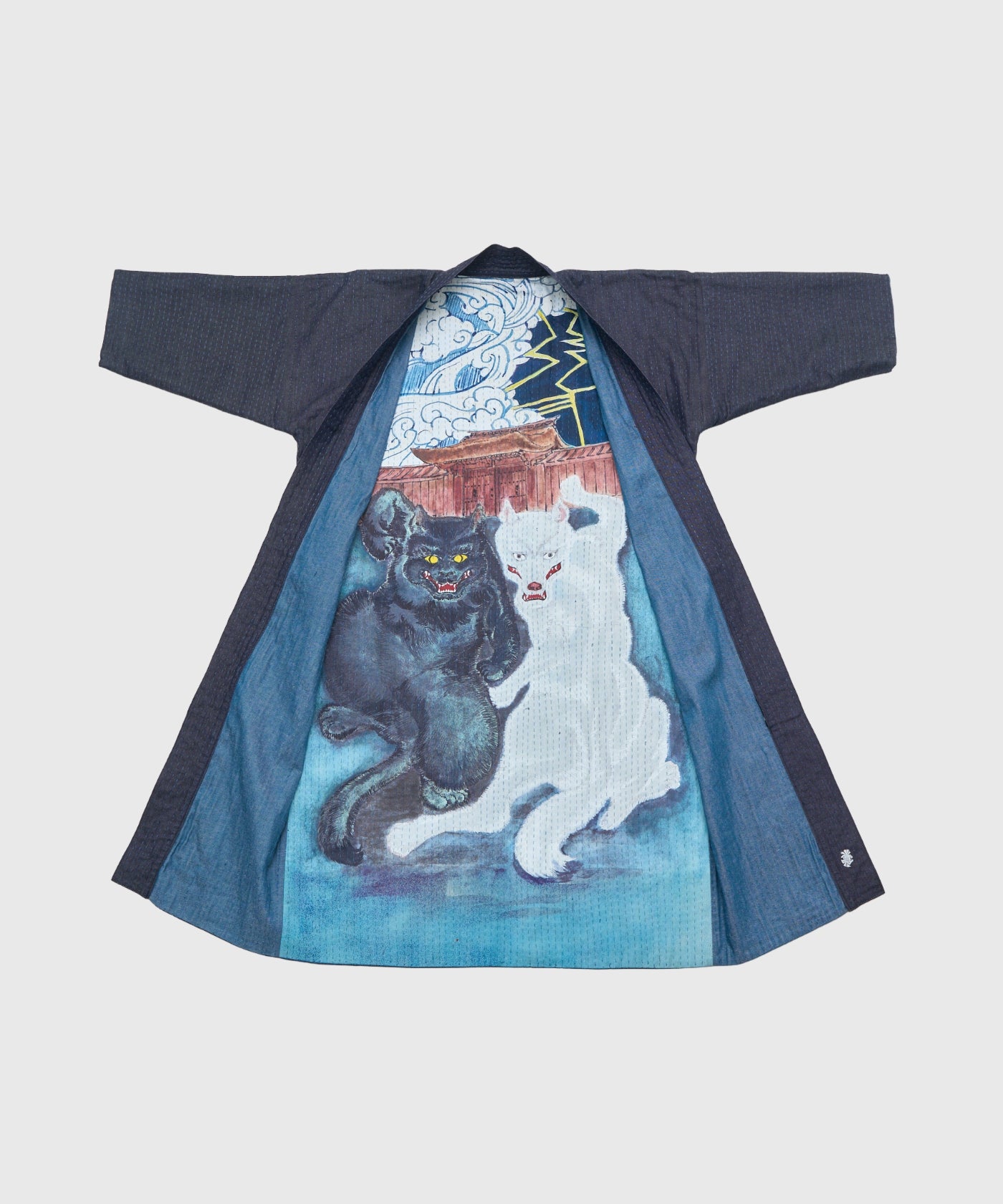
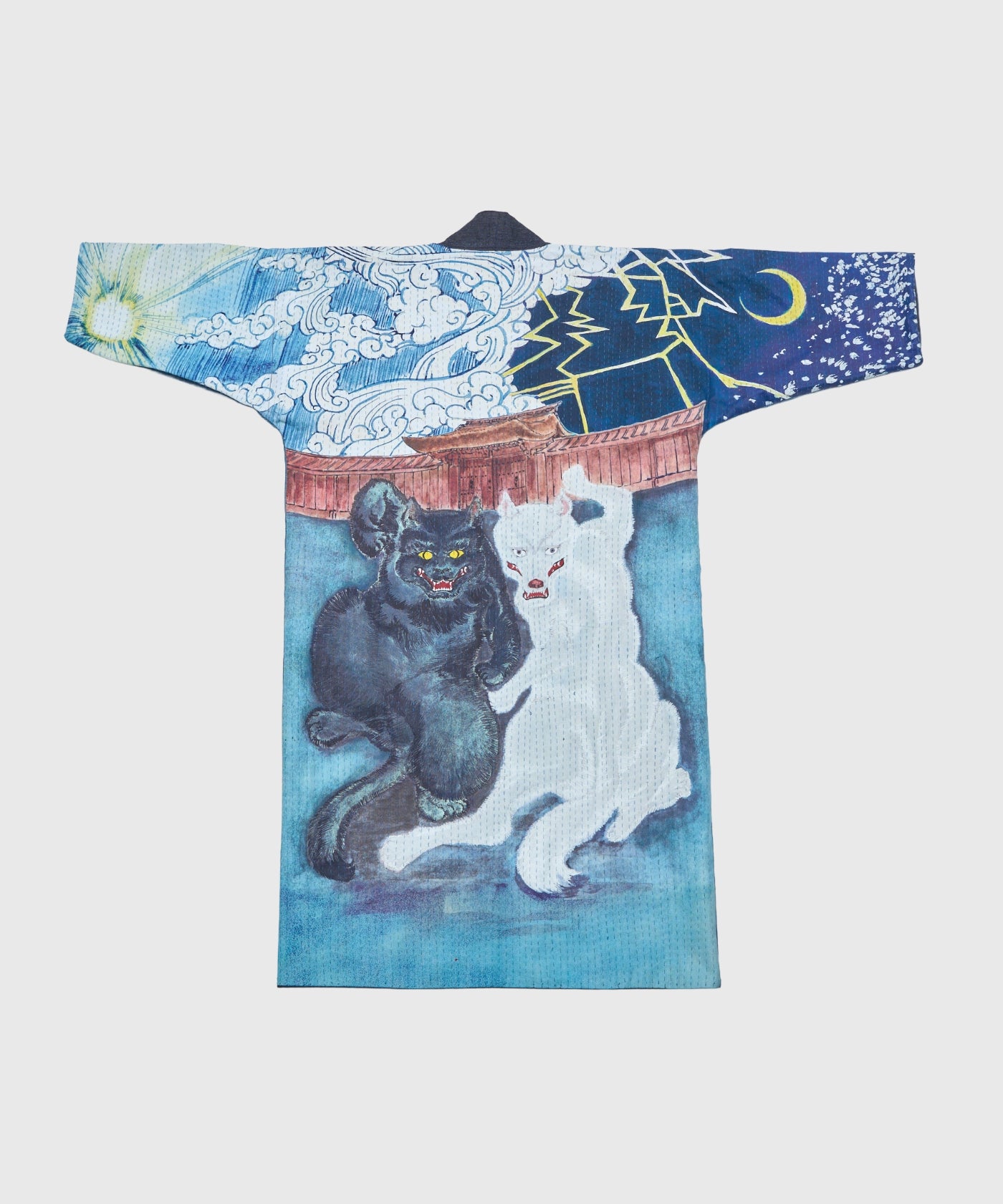
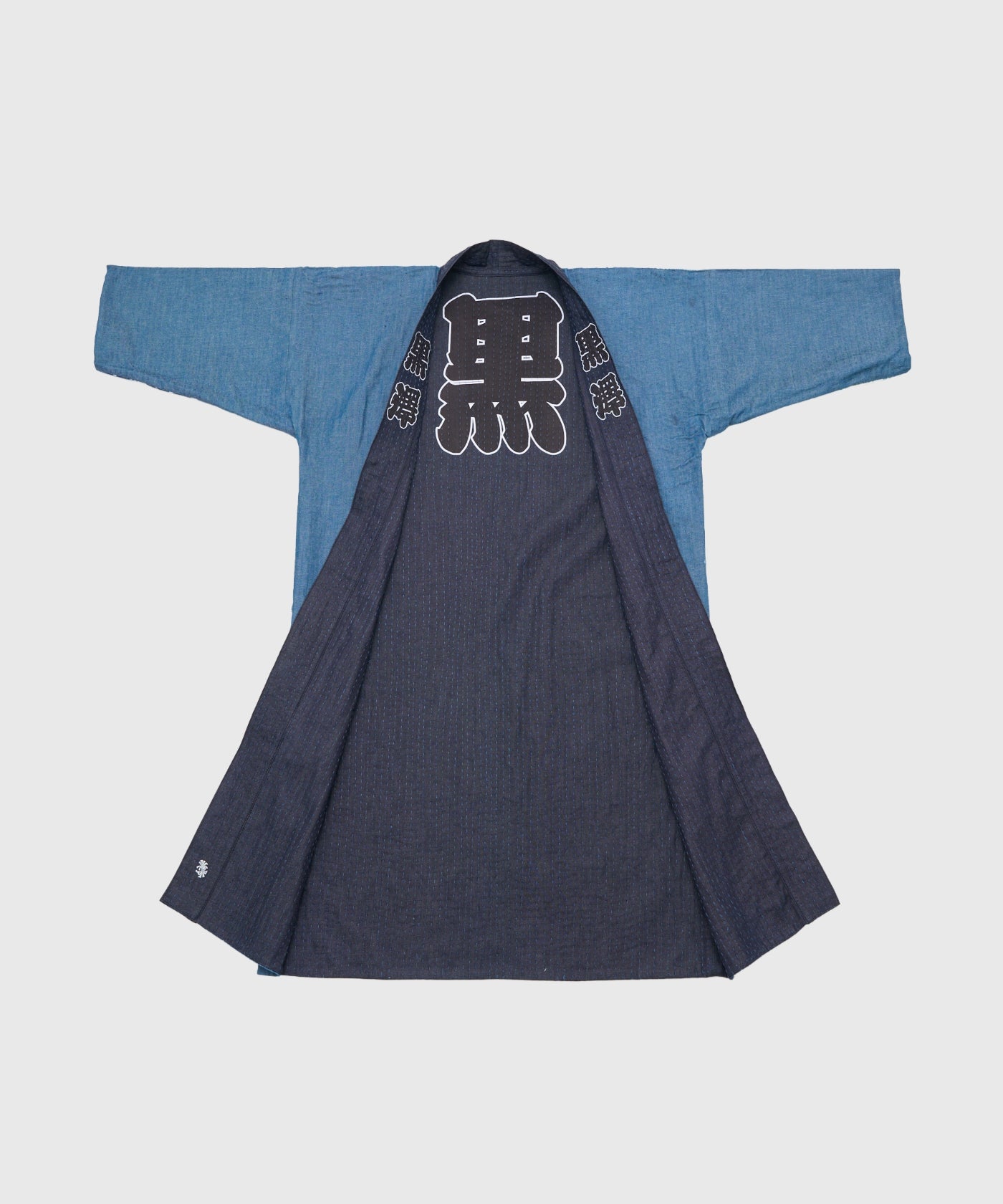
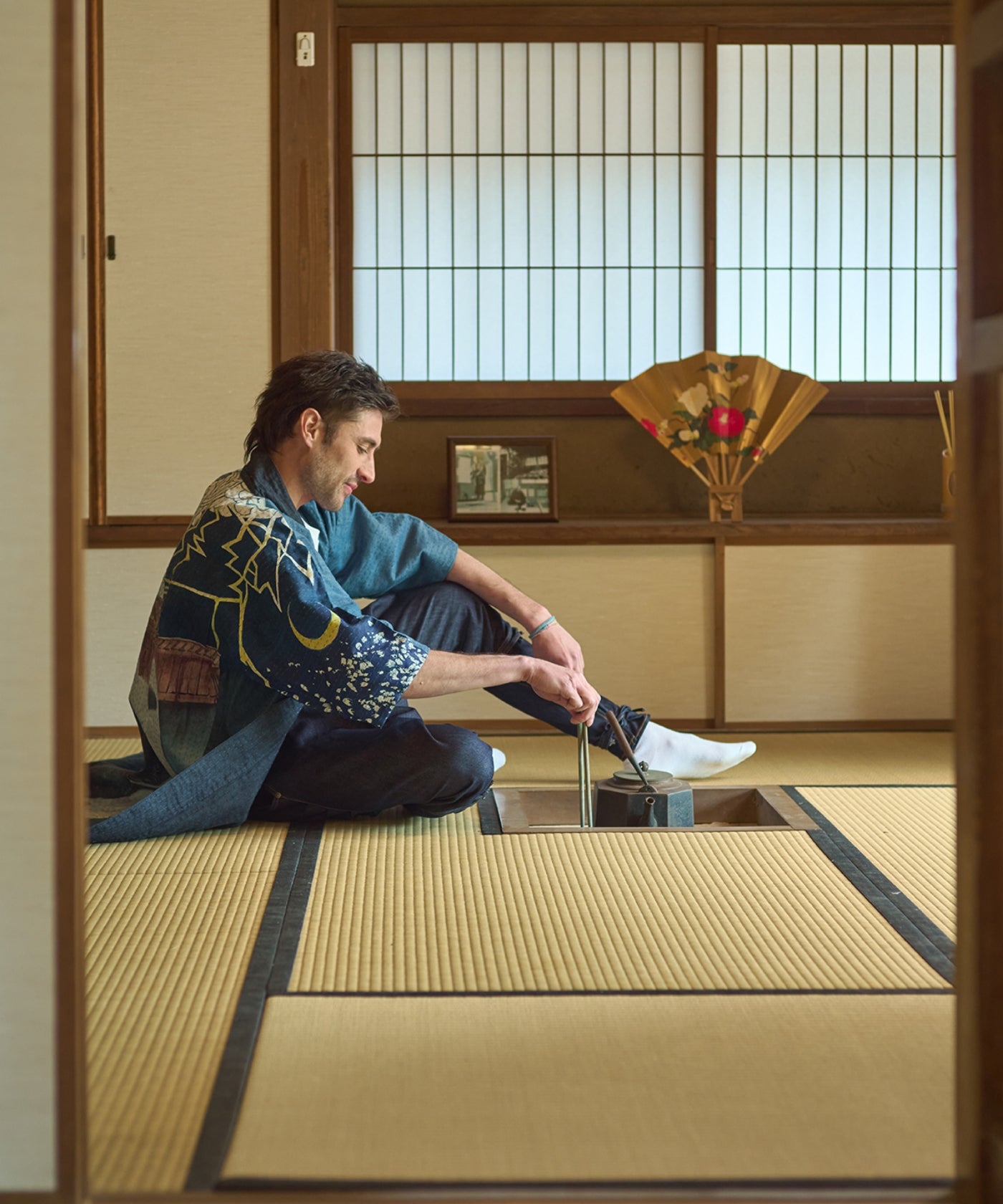
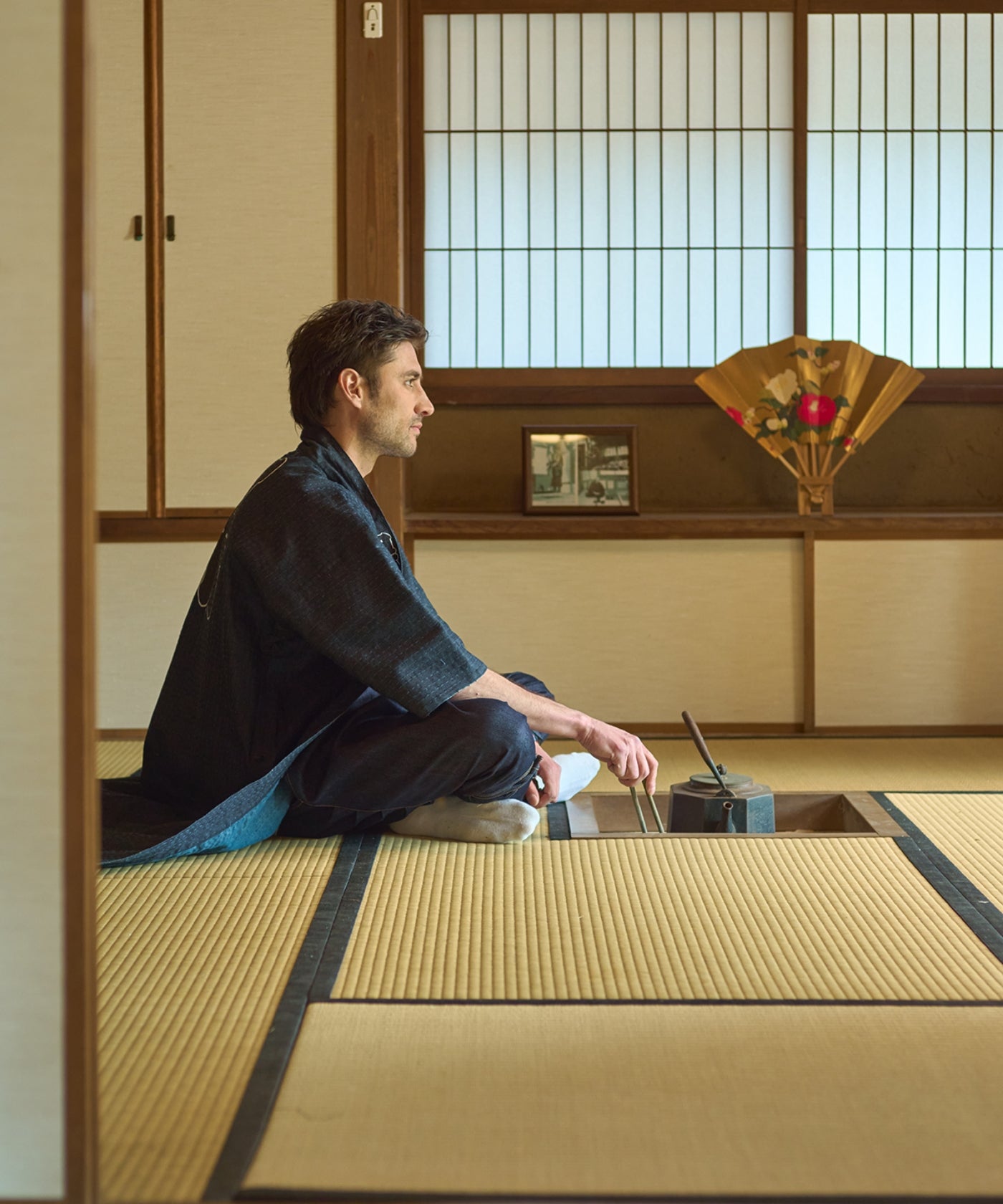
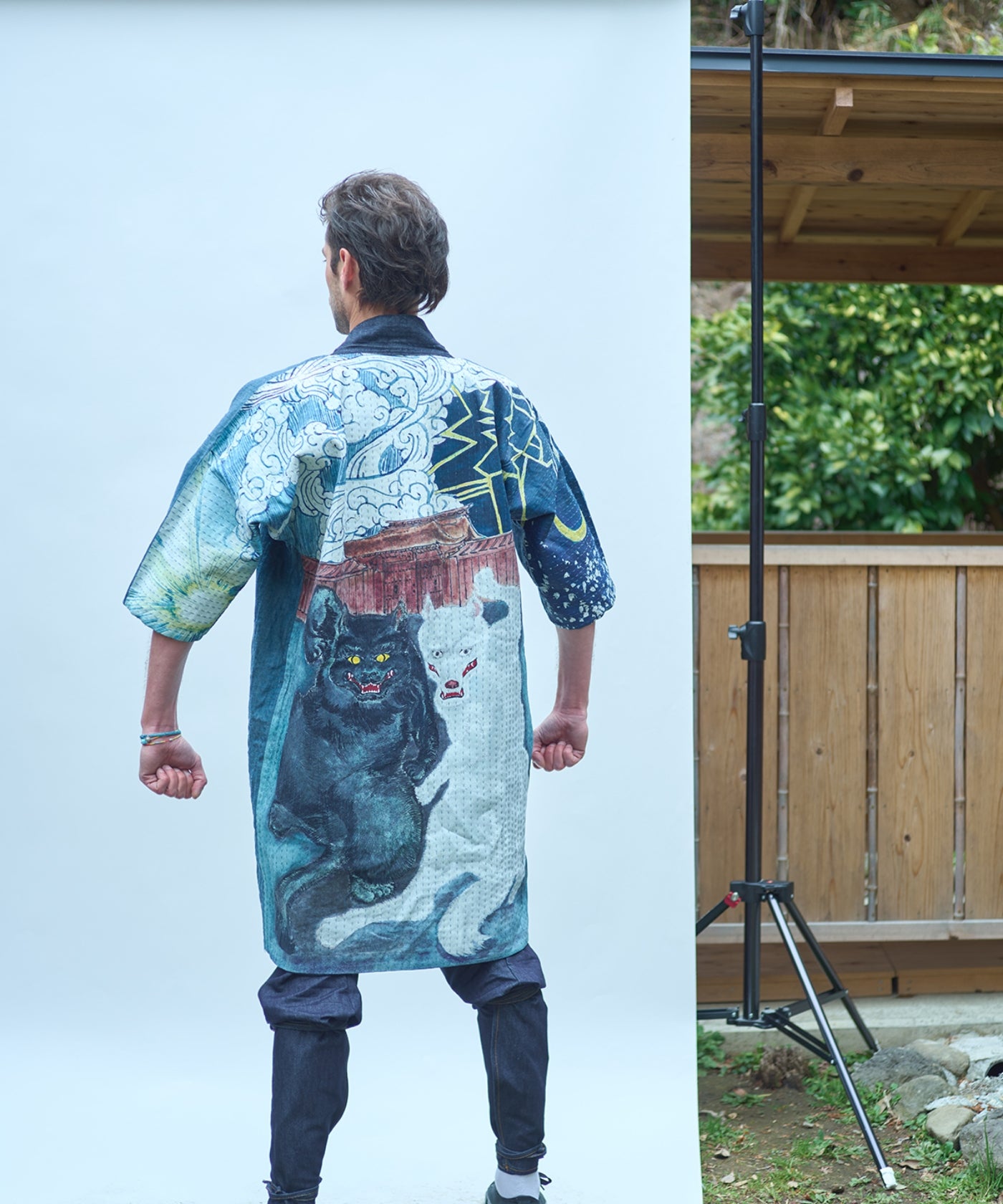
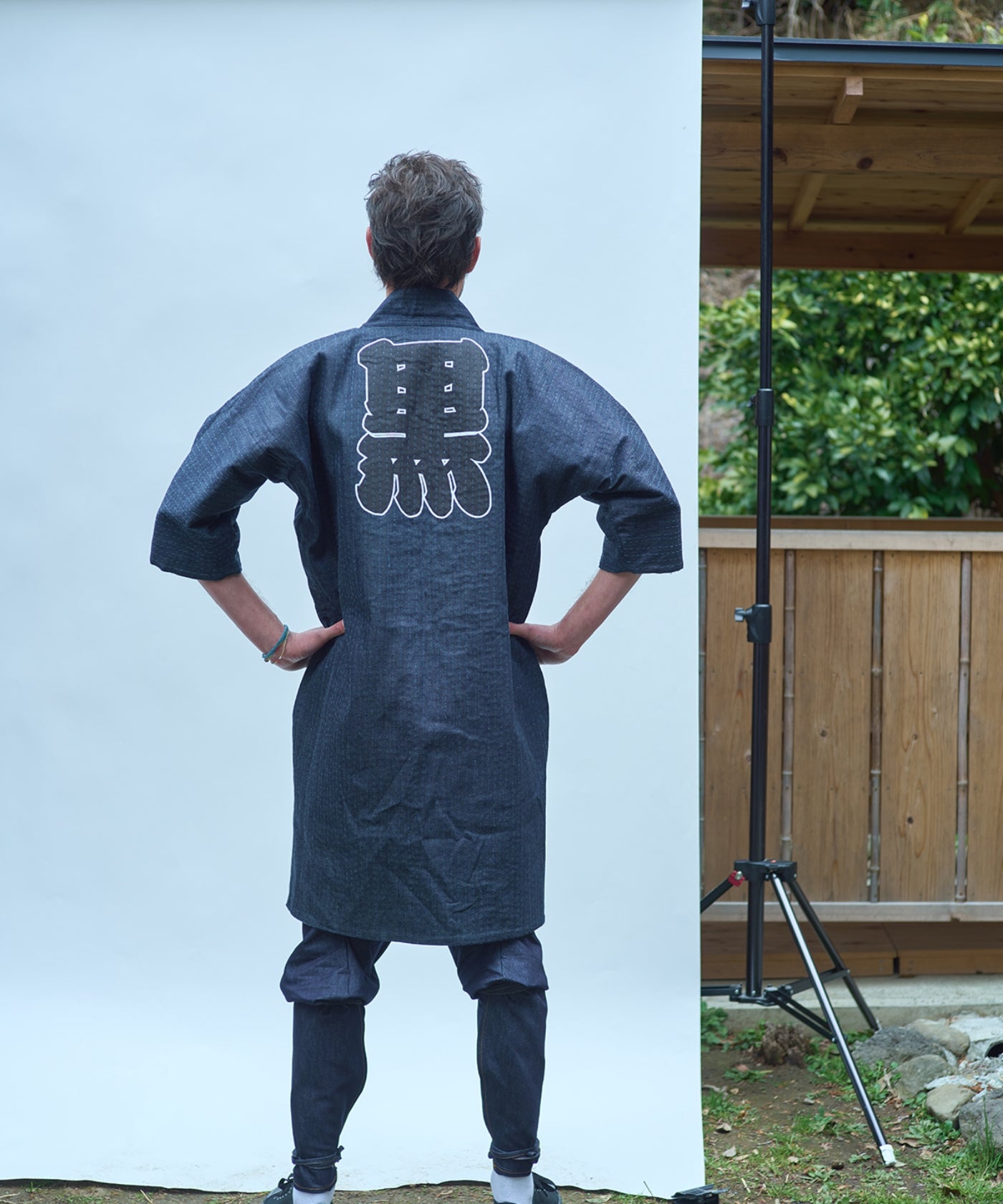
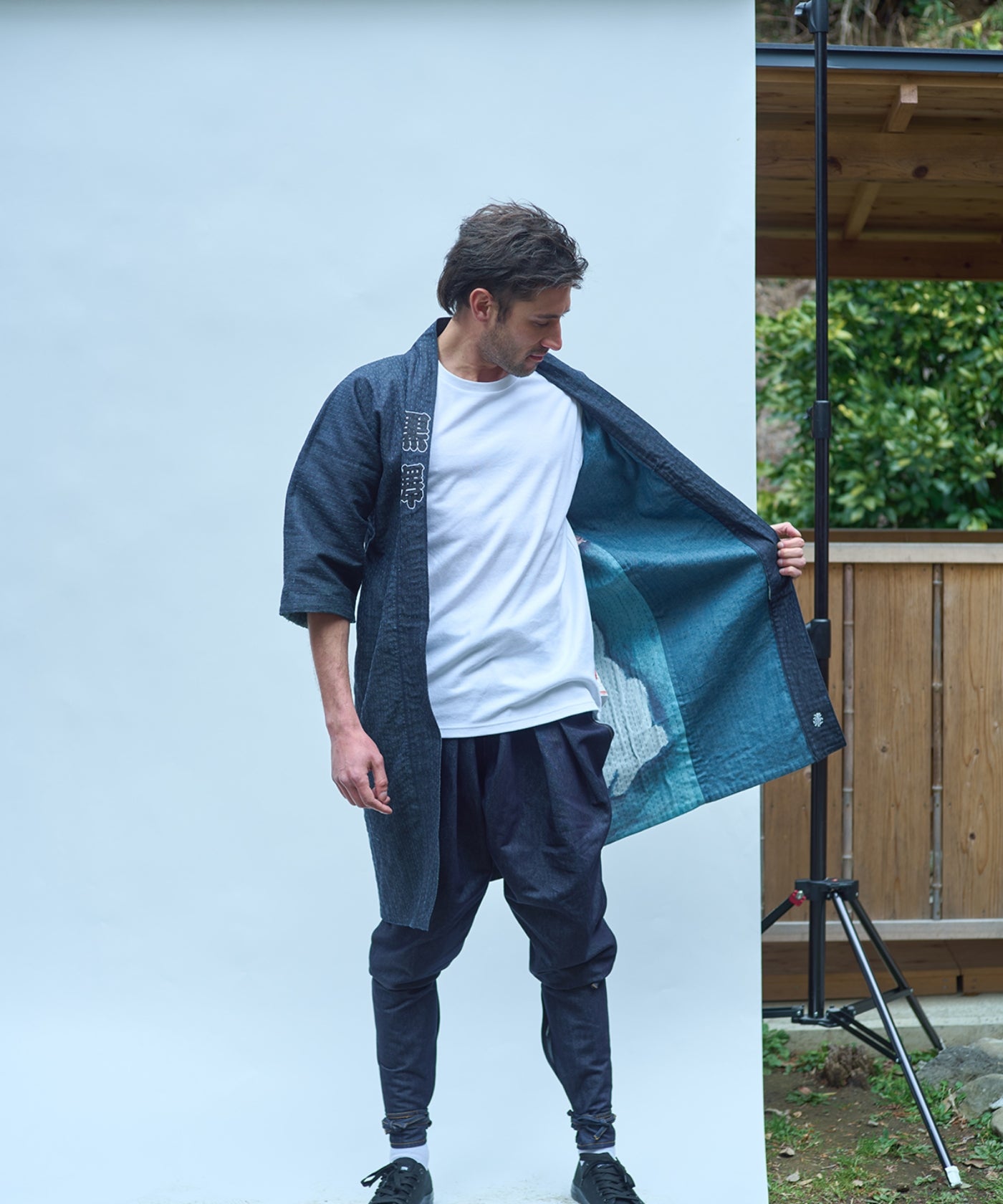
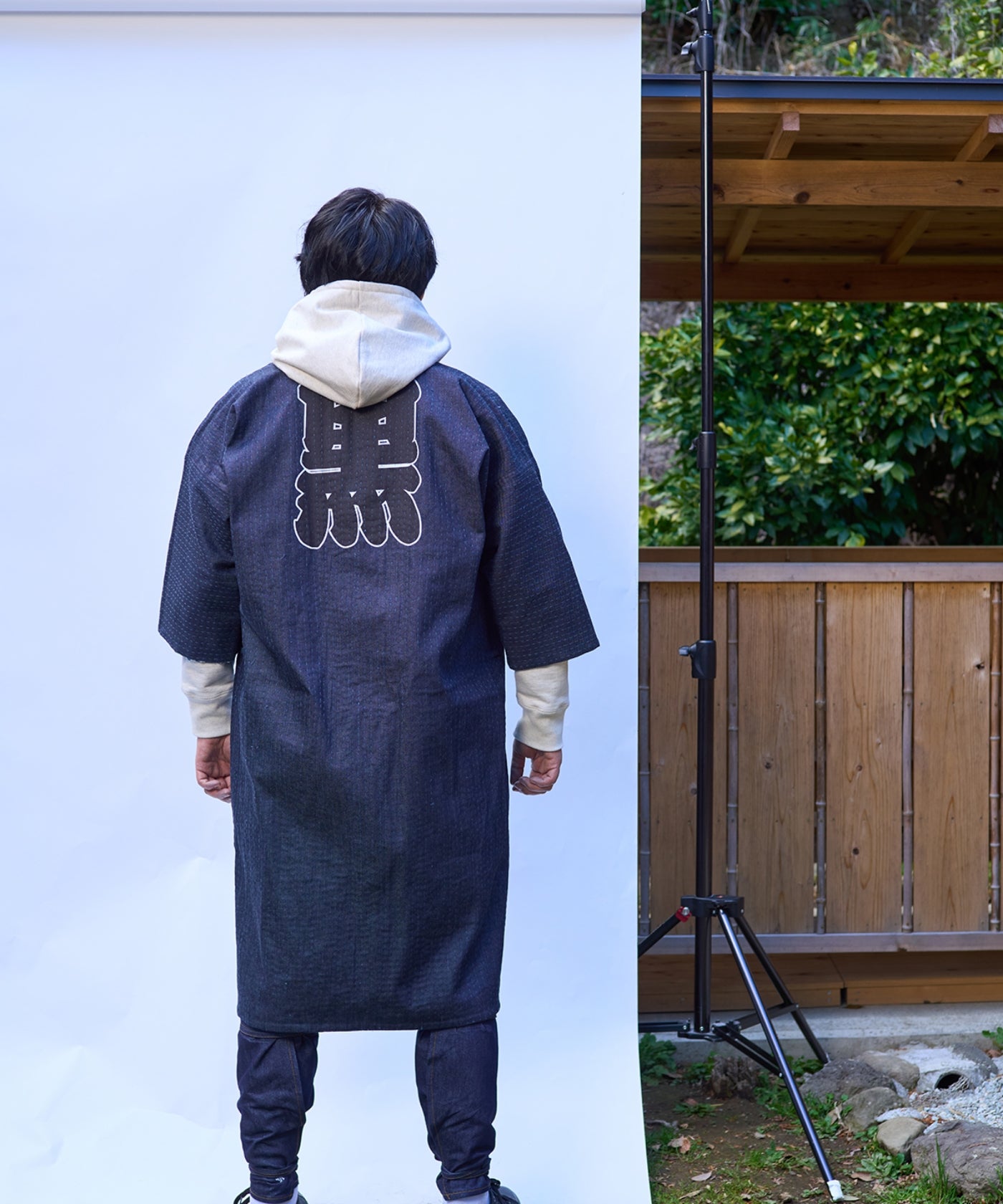
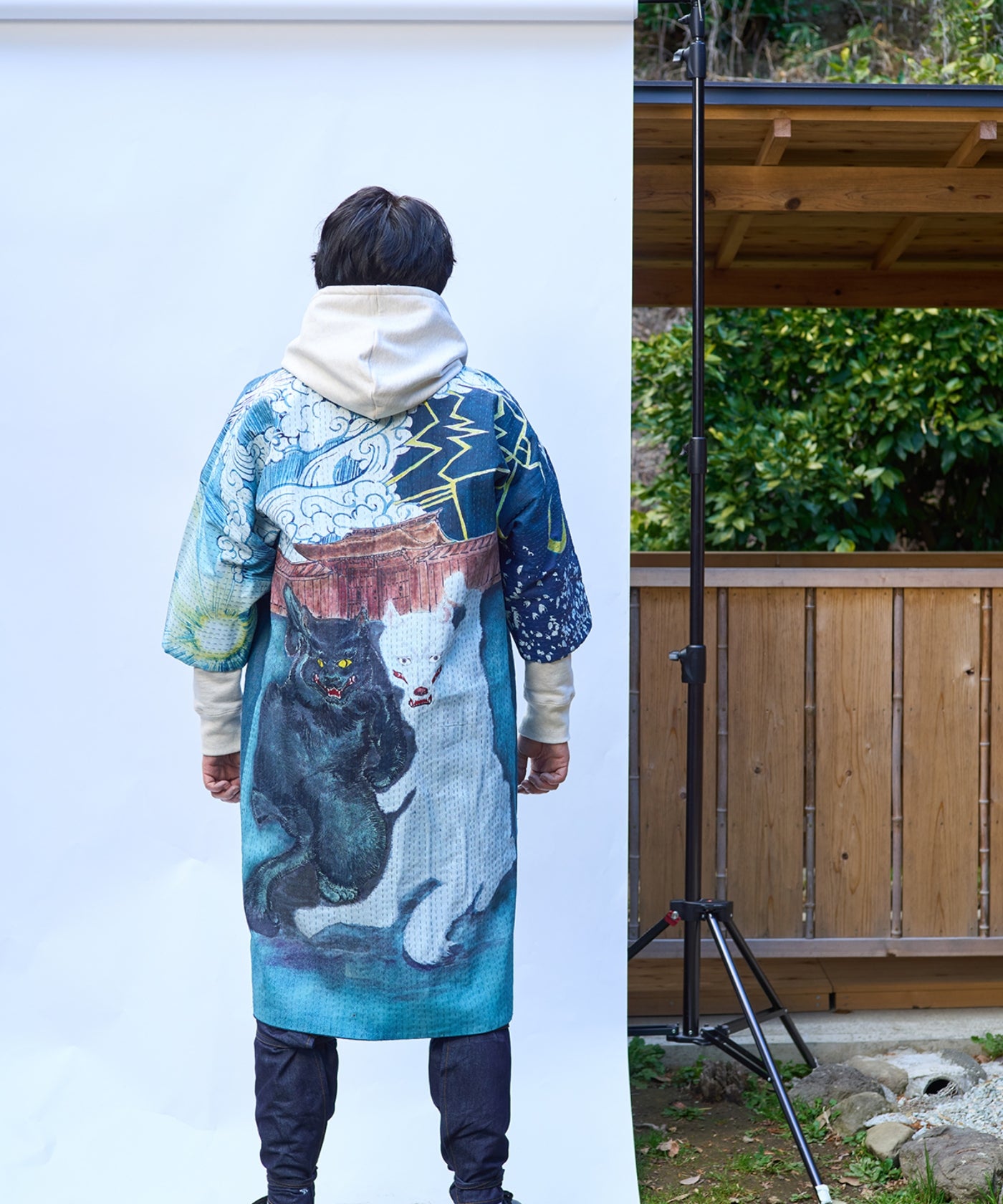
Edo-period firefighters wore reversible sashiko long hanten. When heading out to a fire, they wore the simple outer side facing out. After extinguishing the fire, they would return with the flashy lining side showing — walking through the streets with swagger.
However, making it in actual sashiko would result in a heavy and difficult-to-wear garment. So two layers of soft, low-ounce denim were combined and stitched with a sashiko pattern.
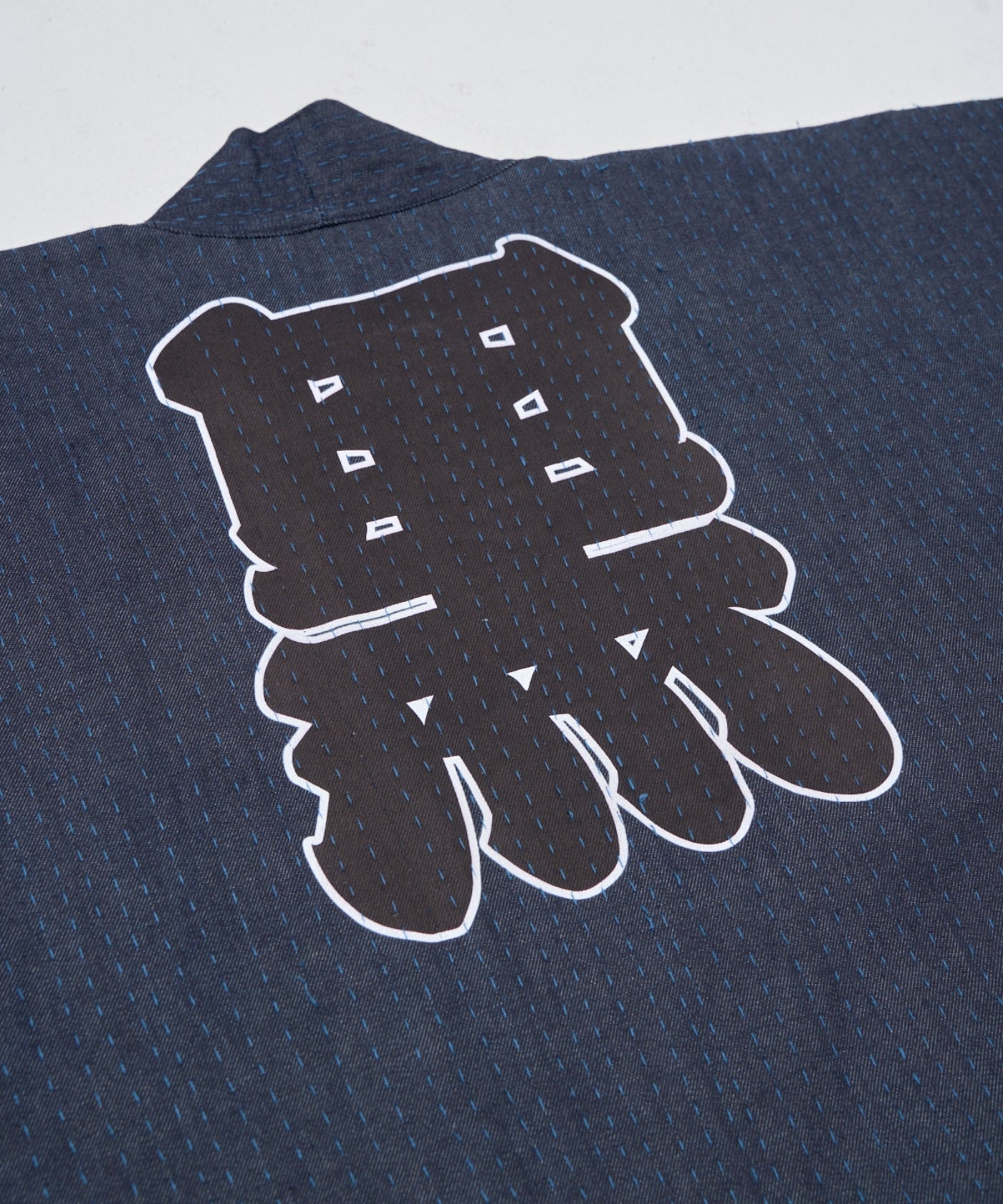
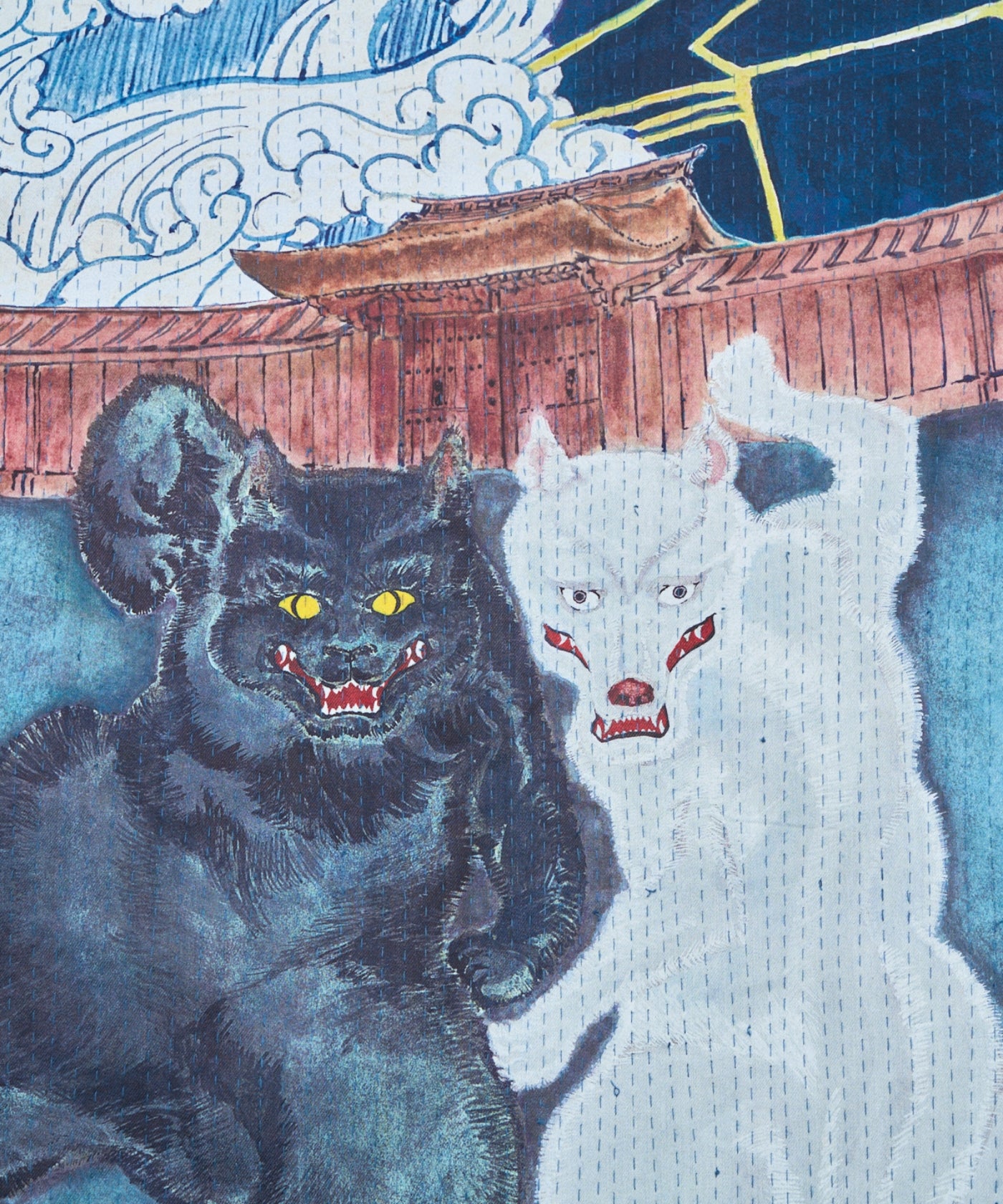
The outer side features the characters for "Kurosawa" from Kurosawa Costume. The lining side reimagines the area beyond a temple gate as a production set — weather scenes of rain, thunder, clear skies, and storms are depicted beyond the gate, along with a cat and dog as Fujin and Raijin (the gods of wind and thunder) guarding the gate (the set). Together, they revive the Edo-period firefighter — a fashion leader of their time — in the modern age.
As only a limited number can be made each year, once stock runs out it may take some time before it is available again.
*Please note that we cannot accept returns or exchanges due to differences in texture.
For purchases within Japan, shipping costs and consumption tax are included in the product price.
For purchases from overseas, the price is calculated on a DDP (Delivered Duty Paid) basis, meaning shipping costs, customs duties, and Value Added Tax (VAT) are included in the product price.
Choose options
This hanten is embroidered by hand, stitch by stitch. This is a product that allows you to enjoy the texture of the craftsman's handiwork.
This product comes with a netsuke loop.
Around the Edo period, people would put a string through their obi, put their wallet or cigarette case on one end, and attach something called a netsuke to the other end to prevent their wallet or cigarette case from falling out of their obi.
This netsuke is currently attracting a lot of attention both domestically and internationally.
We often come into contact with netsuke in our costume work, so we thought it would be possible to match it with modern clothing.
I would be happy if you could find your favorite netsuke and enjoy changing this product to your own color.
[Back protection(Semamori)] [Abare Noshi]
A long time ago in Japan, there was a custom called Semamori.
It is said that a person's soul resides in their back, and that the seams on the back of their kimono serve as ``eyes'' to watch over and protect themselves from evil spirits that may sneak up on them.
At that time, children's kimonos were small and did not have seams on the back, so they added embroidery and decorative stitches to protect the children from monsters.
The pattern ``Abare Noshi'' is a very auspicious pattern that has the meaning of ``connection between people'', as it is made up of ``Noshi'', an ancient Japanese auspicious charm, tied together. The pattern of this wild noshi is also the pattern of the kimono that my mother, Kazuko Kurosawa, wore during Shichi-Go-San.
As a lucky charm for everyone who purchased the item, this embroidery of Abare Noshi will be applied to all Kurosawa costume products.
[Notes]
・This product uses unwashed (rigid) denim.
・Shrinkage will occur when washed for the first time.
・Please take size changes into consideration when wearing.
-Washing may cause tangles at the waist, inseam, etc.
・As the color will fade, please wash separately from other items.

| サイズ | 着丈 (A) | 身幅 (B) | 肩幅 (C) | 袖丈 (D) |
|---|---|---|---|---|
| S | 100cm | 64cm | 69cm | 34.5cm |
| 39.3inch | 25.1inch | 27.1inch | 13.5inch | |
| M | 110.5cm | 65cm | 69cm | 38cm |
| 43.5inch | 25.5inch | 27.1inch | 14.9inch | |
| L | 116cm | 69cm | 73cm | 40.5cm |
| 45.6inch | 27.1inch | 28.7inch | 15.9inch |
